
April/May 2026
On my Forty and Twelfieth birthday. Gardening failure. Writing a book I'm trying to live. And the Good Stuff.

From the Garden


“What soil do you use?” the text bubbled up on my screen. A young friend of mine asking me for gardening advice. I chuckled to myself. My garden is currently a disaster. Who am I to give gardening advice?
They say the best way to learn a new skill is to watch it, do it and then teach it. But can you be a failure at something you’re currently trying to do, and still teach it?
My garden serves as a constant analogy of my life. I’m listening for what God might be saying through the blight on the Roma’s I planted in April, or the prolific fruit of volunteer yellow cherry tomatoes I can take zero credit for.
Right now, there’s a strong urge in me to tear the whole thing down and start over. Gophers have eaten through the drip system. In my distraction, I forgot to shut the water off, so when the timer-valve closed the pressure built up in the line and the hose hemorrhaged all over the woodchips and walkway. The tomatoes I planted have blossom end rot, caused by uneven watering and dry soil. My broken water lines are keeping the soil from getting the moisture it needs. Living in the low deserts of Arizona, especially this time of year, means hot days, which means parched soil, and plastic drip lines and hoses that crack under the insufferable sun.
So just fix the lines already, Sheila! You don’t have to give up on the whole garden just because the water lines need replacing. I know. You’re right. Trying to grow a garden in the desert will test your endurance. You’ll grow tired of every investment being sabotaged by forces of creation you have no control over. This is the plight of every person attempting to grow something in the desert, and every person attempting to partner with God in growing a faithful life. There are seasons when all our labor spiritually, relationally, and even our earthly skills, feels like an effort in futility.
I know why the Preacher declared, “Vanity of vanities! All is vanity!”
So, in April, and now into the closing of May, I’m fighting weariness in doing good. More than just in my garden.
It’s hot. I’m tired. Maybe the wildness of God is going to have to do all the fruit-producing right now.
All I can take credit for is forgetfulness and weakness. This is why I chuckled to myself when my friend asked for gardening advice. In a small way I feel like Sarah. My friend asking for gardening advice would be like Sarah’s friend asking for pregnancy advice when Sarah had been unable to conceive for decades. Maybe when Sarah miraculously conceived she would tell her friend something like, “I don’t know, something’s growing. That’s all I know. And I had nothing to do with it. In fact, everything I’ve tried to do (giving Haggar to Abram) broke my family and now I’m stuck with the mess I made.”
I can tell my friend steps to make her garden grow. But I can’t promise a fruitful harvest. I can’t say water lines won’t burst under the relentless sun. I can’t deliver her garden from nibbling bunnies and undermining gophers. In fact, I know this, whatever is growing in my garden is mostly the work of God, and some birds who scattered seeds on the wind.
I’ve been reading through messages from men and women who’ve reached out to me over the years after reading articles I wrote on the subject of marriage with an unbelieving spouse. My friend is working on a website for me, so I’ve been reaching out to many of these men and women asking if they would be willing to let me use some of their comments and questions as testimonials and blurbs for my site. Reading through their messages sends me to my knees. They ask me how to keep their hearts from growing bitter? How to deal with the constant undercurrent of grief? How to deal with their spouse’s coldness? How to raise children with their spouses? They feel exiled in their marriages, and exiled in the church. They want a good marriage. They want to follow Jesus and serve the church. Here I am in my thirty-third year of trying to live out the answers to those questions, and write a book about it. I’m given the title of author, just as I guess I have the title of gardener, and what do I have to show for it? A bunch of brokenness. And miraculously, some wild fruit of the Spirit.
I don’t have simple how-to’s. I make no promises with my gardening advice, or book on marriage. Except maybe this: It’s not a waste. Even when it feels like it is. Even during seasons of brokenness and loss. It’s not a waste to give yourself to the good work of planting, repairing, watering, and waiting. It’s not a waste to cultivate a life of faith, a life of learning to love.
Marriage Thoughts
I’m about half way through first round edits for Married to An Unbelieving Spouse: Spiritual Practices to Grow Your Relationship and Faith (Baker, 2027).
If it’s true for gardening that I feel silly giving advice considering the current state of my garden, I’m a full-fledged fool writing a book dealing with marriage, when my marriage is far from prescriptive.
Married to An Unbelieving Spouse deals with practicing the spiritual disciplines of the Christian faith when your spouse isn’t a believer. But it mostly reveals how much of what I’ve practiced, and am still prone to, has left my marriage with busted lines of love and trust my husband and I are still trying to repair. I’m still in need of the book I’m writing.
Writing this book is excavating old wounds. And it’s shining light on new issues. Crafting sentences has forced me to stop dancing around what I believe, and don’t believe about some theological issues marriage brings to the forefront. Issues such as headship and submission. Gender roles and authority.
The book I’m writing is examining my heart. It’s confronting me with hard questions. Questions I don’t have all the answers for. It’s helping me to embrace mystery. It’s asking me to trust the God who likes to work through the weak and foolish things of the world to confound the wise.
I don’t know if I’ll be confounding anyone, but I do know I’m weak, and I’m nothing if not a fool. But I believe there’s a calling on this fool’s life to write a book about living a way that is life-giving both for the Christian’s faith and their relationship with an unbelieving spouse.
This work has forced me to wrestle with nagging questions. Questions in the past I may have confidently answered without much thought.
One of the questions that keeps pressing me is, “What does it mean to be a believer?” I mean I know we Christians have the right answer. To be a believer means to trust that Christ died for your sins and rose again to reconcile you to God and others.
Ok, but what does that trust look like? If I’m not trusting, am I an unbeliever? Do believers ever not trust in Christ?
When Jesus spoke to his perplexed disciples he called them, “Believe in God. Believe also in me.”
My husband would tell you he does believe in God. He also believes in Jesus. He believes Jesus was a good man, had a good message, and people should try to be like him. I believe those things too. Of course, I believe Jesus is more than just a good man we should try to follow. So why is my husband the unbeliever, and I the believer?
I grew up in the holler of the evangelical 70’s, 80’s and early 90’s (the Church of Christ) and never heard of a creed. I didn’t know there was such a thing as the Apostle’s Creed, or the Nicene Creed. I heard Rich Mullins’ Creed, which I thought was just a really good song. Unlike me, I’m sure most Christians would say a person needs to confess what’s in the creeds, whether they know the creeds or not, to be a believer.
There is a confessional distinction between a believer and an unbeliever. Maybe that seems obvious. But the longer I’ve walked with this man I love who still holds a skeptical eye to the gospel of Christ I realize the distinction is not just a cognitive theological one. Knowing the right answers about important theological things seems to sort out a believer from an unbeliever. But the irony is, to believe in the Father, Son and Holy Spirit, and in the death, resurrection and coming reign of Christ is to approach the edge of all we know.1
At the start of Wiman’s book, My Bright Abyss: Meditation of a Modern Believer, he shares the beginning of an unfinished poem.
My God my bright abyss
into which all my longing will not go
once more I come to the edge of all I know
and believing nothing believe in this:
He goes onto describe the “intractable” nature of his attempts to finish the poem. “As if it weren’t hard enough to articulate one’s belief, I seem to have wanted to distill it into a single stanza.” He wanted, “some image” to come to him, to say what he couldn’t say.
I could finish Wiman’s poem with, “...and believe nothing, believe in this: the crucified God.” That’s as close as I can get to distilling what moves me from the unbelief of my husband to my unexplainable belief.
The dividing line is there, theologically. Words in the dust. But there’s a whole life opening up to fill in what believing in the crucified God means. A mystery has been cracked open in me to the unsearchable wisdom of this crucified God. It’s growing in me. It’s changing me. It’s distinguishing me from my husband in the mystery of what it means to worship the Incarnate crucified, and victoriously risen God. My life is taking on the cruciform shape of this belief. It’s causing me to walk differently. It’s extending my arms out wide to my husband in vulnerable attempts at loving him the way Christ has loved me.
In Fleming Rutledge’s book, The Crucifixion: Understanding the Death of Jesus Christ, she tells how the Corinthian church saw themselves as above, or beyond the cross, not at the center of it. She says Paul goes to great pains to help the Corinthians see their misalignment with the cross. They needed to be at the center, not above or beyond it. Because the center is where we learn what it means to love one another.
This is what I’m inexplicably drawn to. I’ve looked at Jesus, high and lifted up on that cross, and he’s drawn me to himself. I cannot get away. He bids me come to the center where he will spend my life teaching me to love another well. My marriage is teaching me to stay at the center of the cross. The cross is doing something in me. It’s making me, as Mullins’ Creed declares.
I believe what I believe.
It makes me what I am. I
did not make it.
No, it is making me.
It is the very truth of God
Not the invention of any man.
The Good Stuff
(In my best Bilbo Baggins voice) Today is my forty and twelfith birthday!
I’ll be spending most of the day word-smithing my way through round one edits of Married to An Unbelieving Spouse. I’m learning to cut and slash the fluff; selecting words more freighted with meaning.
It’s a tremendous gift, albeit daunting, to author a book I believe is so needed for the church. But for it to be my first book, at age 52, is an even greater blessing.
A whole new chapter of life is opening up for me that I didn’t see coming. I’ve always wanted to write a book. This isn’t the book I wanted to write. And actually, I’ve written two books that will never be published-- a children’s book about a king and a dragon no less, and a novel I wrote one NaNoWriMo. But this is the book I’ve been called to. It’s the book I’m living.
Writing this book is humbling me. It’s making me a student in my middle age.
I’m entering my 52nd year as a learner, and I’m excited about that. I’m learning to craft better sentences. I’m drawn to learning theology, and church history. I’m drawn to mystery, and not having all the answers. I’m learning to be comfortable with the uncomfortable and fill in the end of Wiman’s poem-- naming what I believe. So for the good stuff section of this newsletter I thought I’d share some of the places on the web and books I’ve been learning from.
From the Web:
A friend sent the link to this conversation between Jen Pollock Michel, Jen Oshman, and Kendra Dahl the other day. As I’ve been wrestling through where I land in the whole discussion about headship/submission, and gender distinctions in the home and church, I’ve read and listened to wise thinkers on this topic who land at different conclusions. I loved how honest these women are in their discussion about their fear about even addressing this topic because of the vitriol out there in complementarian/egalitarian wars. I found their discussion helpful and encouraging. I will be reading both Oshman and Dahl’s books!
The discussion between Michel, Oshman and Dahl led to me listening to this rich conversation at Mere Fidelity. I’m an autodidactic theologian, and a blue-collar one at that. I don’t feel bad about saying that I’m the dog eating crumbs that fall from the table of deep and wide thinkers. I gobbled up the crumbs from the table of this discussion on a theology of headship from a unique perspective. Dr. Lyndon Jost describes the figural interpretation he believes does a better job of describing what it means for Christ to be the head of the church, and a husband to be the head of the wife. He wrote a book about it. Listening to him describe the goal of unity, and the way the head works to unite with the body for the good of the whole at his own expense, makes me want to attempt digesting his book. This discussion reminded me of some of Michele Lee-Barnwall’s work. It also resonated with a thought I keep coming back to. As much as I see the New Creation as a place for the priesthood of the saints— which includes men and women. And as much as I see the mutuality of submission in marriage, and the need for a reciprocal work towards unity, I keep coming back to the fact that Christ came embodied as a man. There is something there for me that honors a distinctly male way of being in the church and in marriage. I hope that makes sense.
Books
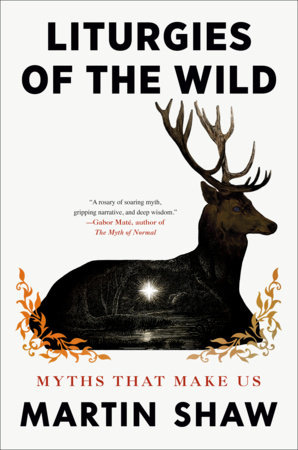
Liturgies of the Wild: Myths that Make Us. I listened to this on audible. I highly recommend listening to Shaw read his beautiful prose. But I will be buying a paper copy to come back to again and again. The way Martin Shaw tells stories and weaves the truth of Christ through it all is just stunning. It whet my thirst again for that old, old story.
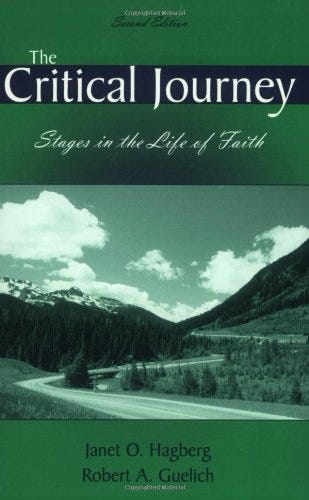
The Critical Journey. This book describes a place I’ve been at least three times in my life— “the wall.” Writing my book has me back in this uncomfortable, even disorienting place in my faith. My friend Christi Lacy, offered The Critical Journey as a resource in my wrestlings. It’s helped me name what I’m dealing with. It’s guiding me in the heart work, and hard work of accepting what I can’t understand as I follow Christ in this already-not-yet life. But it’s also helping me to see my husband differently. I am not the judge of his journey. I am not the Spirit who draws a man to Christ. I do not know all the answers or how things will turn out.
I have a request: Would you pray for me as I finish editing Married to An Unbelieving Spouse? And if you know someone who’s a Christian married to a non-Christian, would you consider sharing A Planted Life with them?
Thank you!
It’s not a waste,
Sheila
Wiman, Christian. My Bright Abyss: Meditation of a Modern Believer. Farrar, Straus and Giroux, 2013. pg. 3
Happy birthday!
I so appreciate reading your reflections on the humbling nature of writing your book. Praying for God to bless you and the work.
I also love this note:
“And as much as I see the mutuality of submission in marriage, and the need for a reciprocal work towards unity, I keep coming back to the fact that Christ came embodied as a man.”
Loved this! Ever time I start writing a book, I have to destroy and rebuild my theology.