
June 2026
Bermuda grass. Sin. And why the one acceptable tool I was taught to use in marriage wasn't enough

From the Garden
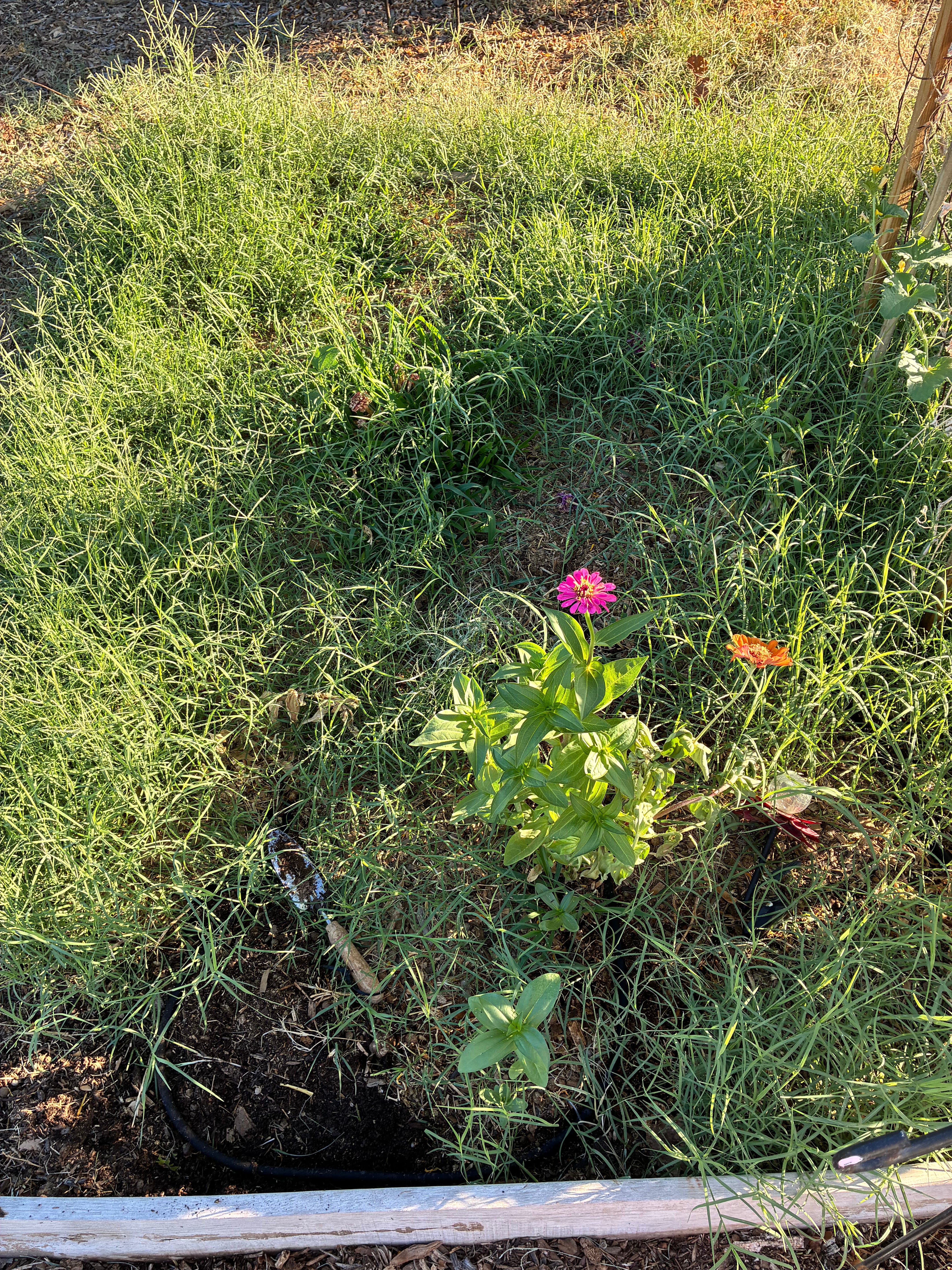
Bermuda grass is public enemy number one of every gardener. Or at least this gardener.
Since the only time I can tolerate being outside is before sunrise and after sunset, I’m spending very little time in my garden lately. For months I’ve neglected the vital work of daily weeding. Hence, the planned multicolored zinnia bed is now a field of knee-high bermuda grass.
I don’t want the entire garden to be overtaken by grass so I considered planting cowpeas once I got the majority of the Bermuda out, thinking their nourishing work would keep the grass from overtaking.
Cowpeas are a great cover crop in this desert’s brutal heat. They’re great for the soil and I don’t have to tend to them. But I wasn’t sure if planting cowpeas would subvert and drive out the bermuda. So I did a little research on the best, non-chemical ways to rid a garden of bermuda grass. Turns out, cowpeas aren’t the answer. They do a powerful, humble work of enriching the soil, but they don’t do the proactive work of restraining the evil invasion.
Here’s what I found are the best ways to keep Bermuda from taking over your garden bed are:
Accept that the ground will never be completely free of the grass, and take steps 2-3 to live at peace with the reality that Bermuda is in your soil.
Starve the grass from light.
Visit your garden every day. Every single day get out there and pull some bermuda up by the roots. If you do a little daily your garden will not be overrun by this noxious grass.
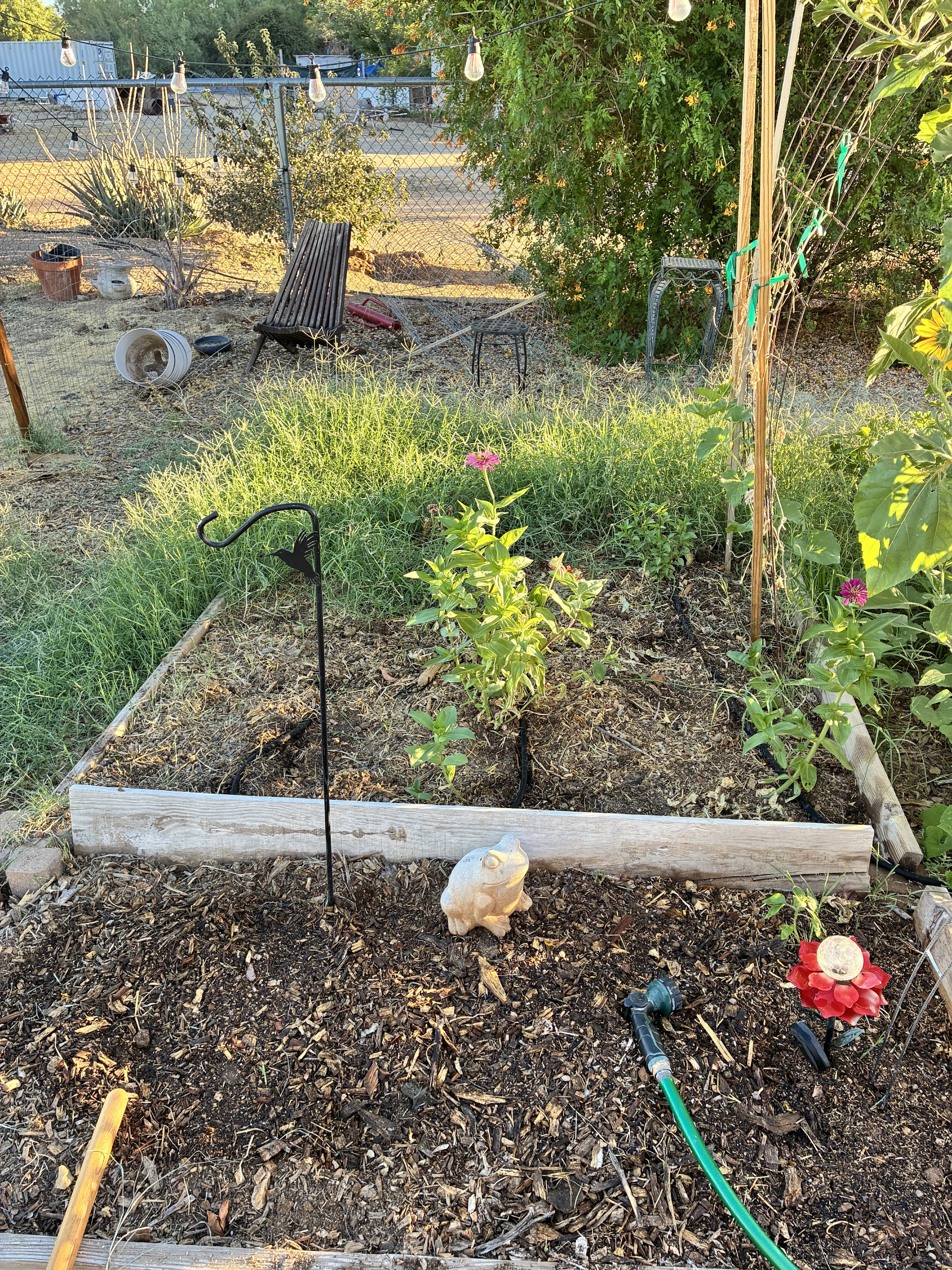
If you’ve been reading this newsletter, you probably aren’t expecting straight-forward gardening advice from me. As I said last month, I’m a gardening novice. I’m learning. But these tips are spot on. And they are teaching me something more than how to keep the bermuda from overtaking my zinnia beds. This advice reminds me that sin is an embedded reality. It’s pervasive, insidious, and invasive in our fallen human state. Growing a healthy spiritual life requires acceptance of our condition, humility to work from honesty, and proactive resistance of what’s choking the life out.
It’s true--Christ died to free us from slavery to sin. Yes, we should cut off whatever causes us, and others to sin. Yes, we should put to death the deeds of the flesh. But until resurrection we will be dealing with the noxious reality of sin’s presence in our lives. We will keep finding hatred, selfishness, pride, greed, lust, and apathy popping up and spreading beneath the surface of our lives.
The work of spiritual gardening where sin is always present is a multi-tooled work. It rests and works from grace. And it’s both proactive and reactive. It plants and nourishes with prayer, the word of God and self-sacrificial love and service of others. It also does the daily work of confronting and repenting of the sin we find perpetually popping up.
I can’t take a month’s long break from my proclivity towards sloth. Every instance of avoiding a problem, or choosing to walk through the living room without a gentle touch on my husband’s shoulder, or a tender glance his way, is me ignoring that verdant head of sin poking up in my life. If I do this for days, before I realize it, I’m nearly convinced that all effort towards a healthy marriage is vanity and I should just move out into the desert and become a hermit.
Alas, the garden is teaching me much these dog days of summer. If I want my life of faith in Christ to flourish I must accept that until I see Jesus face to face I will have to learn to live with the law of sin at work in my body (Romans 7:22-25).
If I want to be fruitful, I must do the daily work of visiting my spiritual garden. Planting God’s word in my life nourishes the soil of my sin-infested heart. But meditating on God’s word without taking up the work of the cross—confronting, resisting, rebuking, repenting of sin— is not good for my life in Christ. Like James said, I’ll be like a person who looked in the mirror and forgot what he looked like (James 1:22-25). Or to stick with the garden metaphor, I’ll be like a gardener who plants zinnia seeds but ignores the invading Bermuda grass.
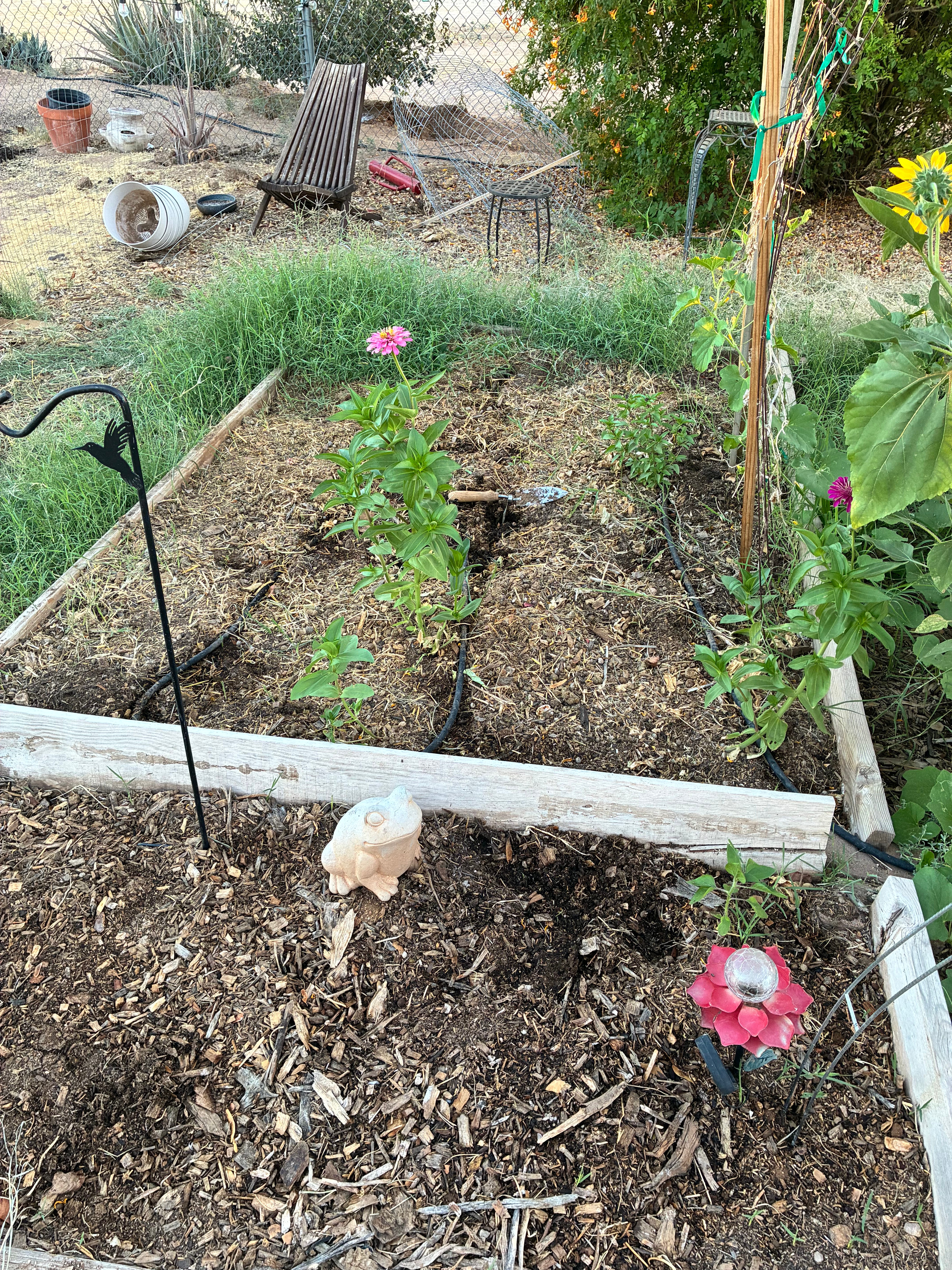
And it’s all grace. Every day. Grace to pushback what wants to invade and overtake. Grace to forgive. Grace to rest in the sufficiency of Christ. Grace to press on in the good work. Grace to believe my labor isn’t in vain.
Marriage Thoughts + Book Update
Marriage is a garden too. It’s a land some of us are called to cultivate and grow in for the glory of God and each other’s good. It’s been the land of my sojourn for nearly thirty-three years.
Looking back over years of living here, one of the major causes of trouble for my marriage was the hemiplegic way I learned to work this land.
As a conservative, evangelical woman coming to faith in the early 90’s, I learned early on that there is only one acceptable tool for me to use in growing a God-honoring marriage—submission.
Unlike the rebuilders of the wall in the book of Nehemiah, I wasn’t taught to take up both a building tool, and resisting one (Nehemiah 4:15-23). Or, to keep the garden metaphor, I didn’t learn to use the spade and sheers, or even to actively plant. I learned to be quiet, and accept the state my marriage was in. I learned to do good things— pray, give my husband compliments, defer to him, make good food, and keep a clean house. Don’t get me wrong. These are not bad things. But if you only do those things, and don’t also do the confrontational work required for a healthy marriage, you’ll end up with an unhealthy marriage.
I didn’t learn to do both the proactive and reactive work required to grow a healthy relationship. And I don’t think I’m alone. In my experience there’s a heavy emphasis in the church on wives doing the more passive, accepting, deferring, submissive work in marriage, and husbands doing the more assertive, challenging, leadership work. This kind of lopsided emphasis leaves many women and men ill-equipped to do the good work the Spirit leads us to do in marriage
As a woman I have been discouraged from engaging in the active work of confrontation, conflict, and collaboration. Recently a godly church leader’s advice to me was to affirm whatever leadership qualities I do see in my husband (again not a bad thing). But his advice didn’t encourage me to lovingly confront what was harming our marriage, or what I desired to see grow in our marriage. That kind of advice is reserved for the leader, the man. Not the helper, the woman.
I was taught to live off the wild plants that grew in our marriage garden. But not to participate in the defensive work of keeping invaders out, or even engaging my husband in purposefully planting a crop we wanted to grow together. As a result the marriage land we lived in became overrun with biting fire ants, invasive weeds, and sickly, wild fruit.
My thoughts were bound with heavy burdens to attempt to win my husband by being submissive enough, quiet enough, gentle enough, accommodating enough, sexy enough. This, I thought, was the way I pleased God in marriage.
But my unbelieving husband wanted a relationship, a partnership. He wanted me to engage in conflict with him. He wanted me to stand for what I believed, even though he criticized it. He didn’t know it, but he wanted me to do what Christ and the scriptures actually teach a Christian to do in loving others. He didn’t say it that way. He had some saltier language. He didn’t encourage me to “speak the truth in love.” He said, “I don’t want a submissive wife, Sheila. I want someone who will tell me to f*** off!”
What he wanted was a wife who would partner with him in working the marriage land together. He wanted me to fight for this territory with him.
When I stopped trying to tow some legalistic idea about Biblical womanhood, and started engaging in conflict, confronting what was causing harm, and intentionally pursuing what was good for our marriage it didn’t magically get better. It actually got worse at first. But when my husband joined me in laboring for a healthier marriage together, something good started growing.
Next week is a big week for me. I’m going to pull back the curtain on the cover of my book—Married to An Unbelieving Spouse: Spiritual Practices To Grow Your Relationship and Faith.

Today I texted my husband the exciting news that my book will be available for pre-order and I get to reveal the cover. He texted back, “I’m very proud of you with this accomplishment. You’ve put a lot of hard work into this.” Ya’ll, I can’t even seem to find the words for what a blessing it is that my husband is so supportive of me writing this book.
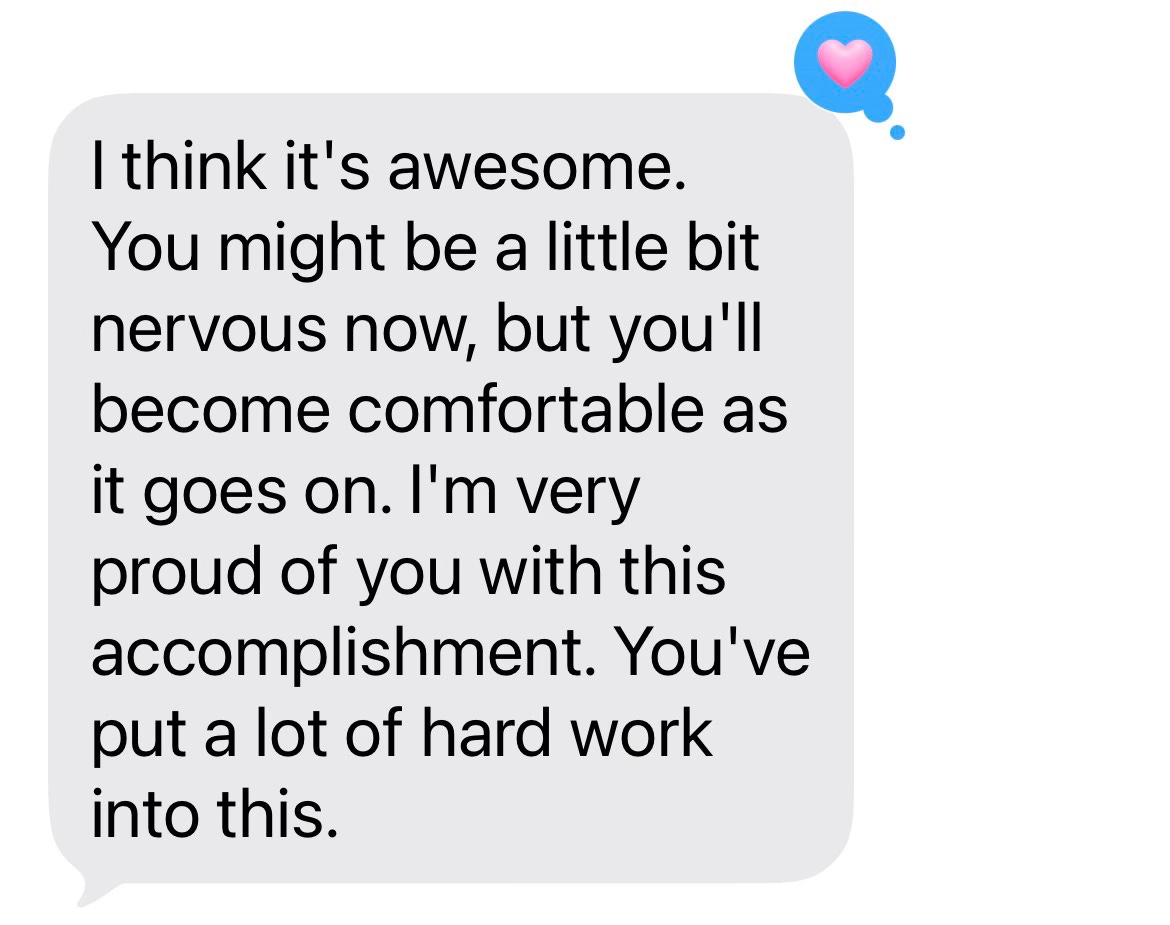
It’s not lost on me how ironic it is, that the one with the red letter, the “unbeliever,” in our relationship is encouraging me to write this book. It seems like he should be defensive, or put off by being the “unbelieving spouse” in my book. So many people have asked me, “How does your husband feel about you writing this?” We frame the unbeliever as the antagonist, the believer as the protagonist.
But it’s not that way at all.
We’ve both been the bad guy in this marriage. We’ve both been unbelieving. It is Christ who’s done the good. It’s the goodness of God that’s turned my heart away from idolatry and legalism, to freedom and love in Christ. It’s that same goodness of God that turned my husband towards doing what’s good for our marriage.
My thoughts are turned towards how often Jesus drew the “believers” attention to the “unbelievers,” the outsiders, the foreigners. The believer’s unbelief was revealed in the faith of the unbeliever (see Matt.8:9-11, .
It’s easy to start thinking of yourself as superior, or the one with the right answers as a Christian. But being a Christian in my marriage has meant acknowledging my own unbelief, admitting I don’t have all the answers, confessing how wrong I’ve been.
Taking up the spiritual practices that cultivate a healthy faith and a healthy marriage is a cooperative work. It requires both my husband and I to be willing. With the Spirit, by the grace of God, compelled by the love of Christ my labor is not in vain.
My husband may not (yet) embrace Christ and worship him, but he’s still walking with me while I do. And he’s encouraging me too. It took a long time to get here, and we’ve got a long way to go, but I’m thankful for where we are— working together with more tools to build a healthier marriage.
The Good Stuff
Here’s a link list of some good stuff I’ve enjoyed in June, even amidst the pressures of editing and releasing my book into the world.


